
Poster Awards
On behalf of the poster judges, the Scientific Committee chairs are excited to announce the EHPS 2026 poster award winners. The poster judges were impressed by the high visual quality and methodological rigor of the posters. We congratulate all presenters on their excellent work.
From all presented posters, we identified two poster award winners per day. The prize-winning posters, in no particular order, are:
-
The Role of Spirituality in Adaptation and Health Outcomes in Oncology: A Scoping Review
-
Dynamic communication between parents and adult children in caregiving: Weekly self-disclosure and protective buffering.
-
How should we measure loneliness in older adults? A comparison of single- and multi-item measures.
-
Climate change in rural areas: psychosocial and health impact.
-
Reducing sedentary behavior in older adults: a full factorial randomized trial.
-
Personalized digital healthcare advice to bridge the digital divide: A pragmatic evaluation in GP practice.
You can click on each poster title above to see the judge’s report, the submission’s abstract and the poster itself
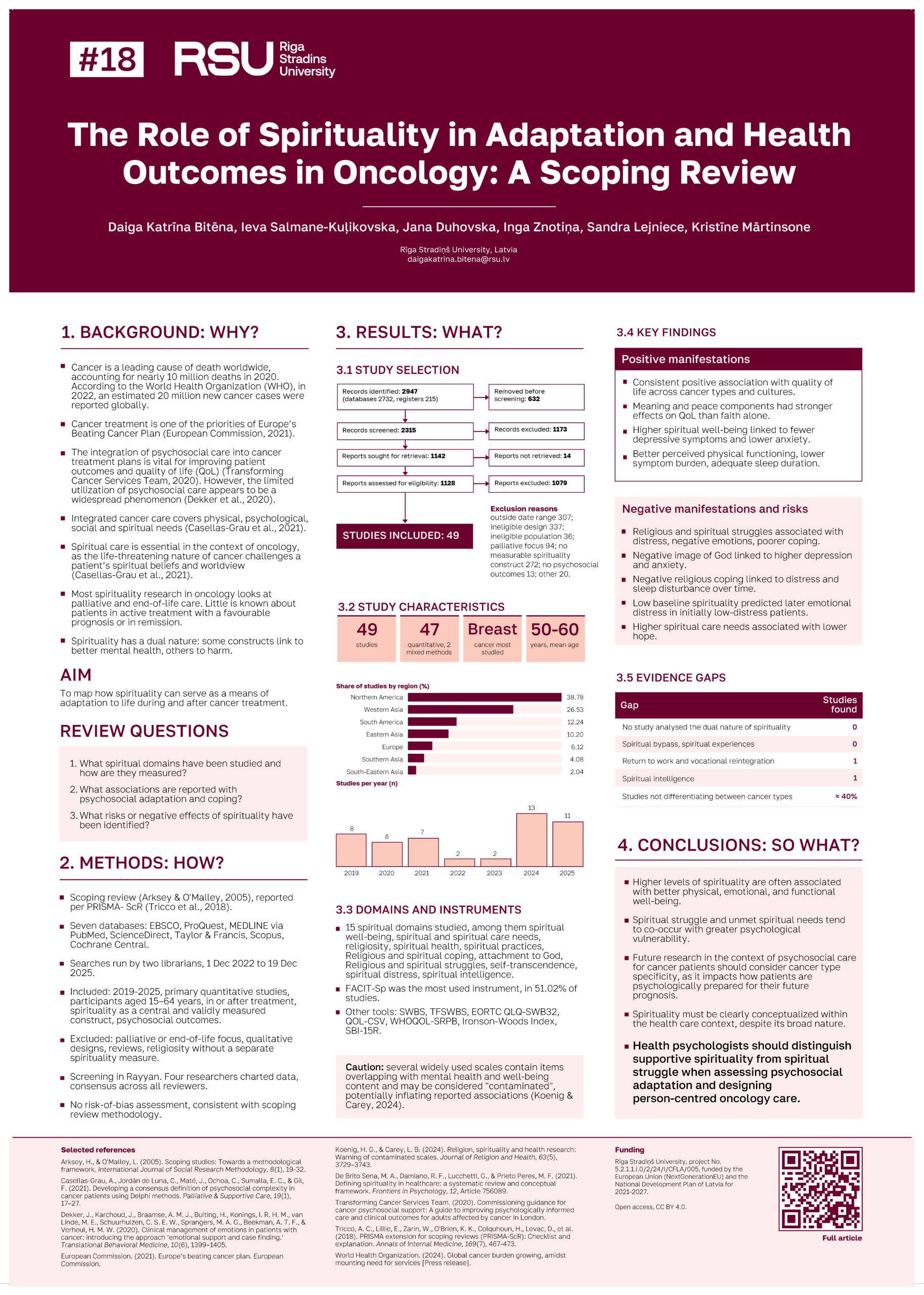
The Role of Spirituality in Adaptation and Health Outcomes in Oncology: A Scoping Review
Abstract:
D.K. Bitēna1, I. Salmane-Kuļikovska2, J. Duhovska2, I. Znotiņa2, S. Lejniece1, K. Mārtinsone1
2Riga Stradiņš University, Latvia
Quality of life is a central outcome in oncology care and includes physical, psychological, social, and spiritual dimensions. Spiritual care is increasingly recognized as essential, as the life-threatening nature of cancer often challenges patients’ spiritual beliefs and worldviews. However, research on spiritual care has primarily focused on palliative and end-of-life contexts, and little is known about how spirituality supports adaptation during cancer treatment with a favorable remission outlook or in the post-treatment phase, and how it can be meaningfully integrated into psychosocial care across these stages.
This scoping review aimed to synthesize recent quantitative evidence on the role of spirituality among working-age oncology patients during and after cancer treatment. Arksey and O’Malley’s scoping review framework was applied. An analysis of 49 quantitative studies published between 2019 and 2025 revealed both positive and negative facets of spirituality in the context of cancer.
The review identified notable gaps in research on spirituality-related risk factors, as well as the impact of spirituality on mental health outcomes. Overall, quantitative evidence indicates that higher levels of spirituality are frequently associated with better physical, emotional, and functional well-being, whereas spiritual struggle and unmet spiritual needs tend to co-occur with increased psychological vulnerability. These findings point to an important area for further research to better understand the role of spirituality in cancer care.
Finally, the lack of consensus regarding the definition and measurement of spirituality in oncology presents ongoing methodological challenges. This review highlights the need to integrate structured spiritual care into cancer treatment.
Click on the image to view the poster
The Judges’ Decision
This poster addresses spirituality, a resource variable far less commonly studied than other psychosocial factors, with a welcome focus on patients in active treatment or remission rather than palliative care. The scoping review is well conducted, following PRISMA-ScR guidance with searches across seven databases and consensus-based data charting. The poster is clear and well structured, highlighting key findings such as the dual nature of spirituality as both a resource and a source of struggle. The identification of evidence gaps and the caution about “contaminated” measurement scales further reflect critical engagement with the literature.
Dynamic communication between parents and adult children in caregiving: Weekly self-disclosure and protective buffering
Abstract:
L. Chen1, A. Looijmans1, M. Hagedoorn1
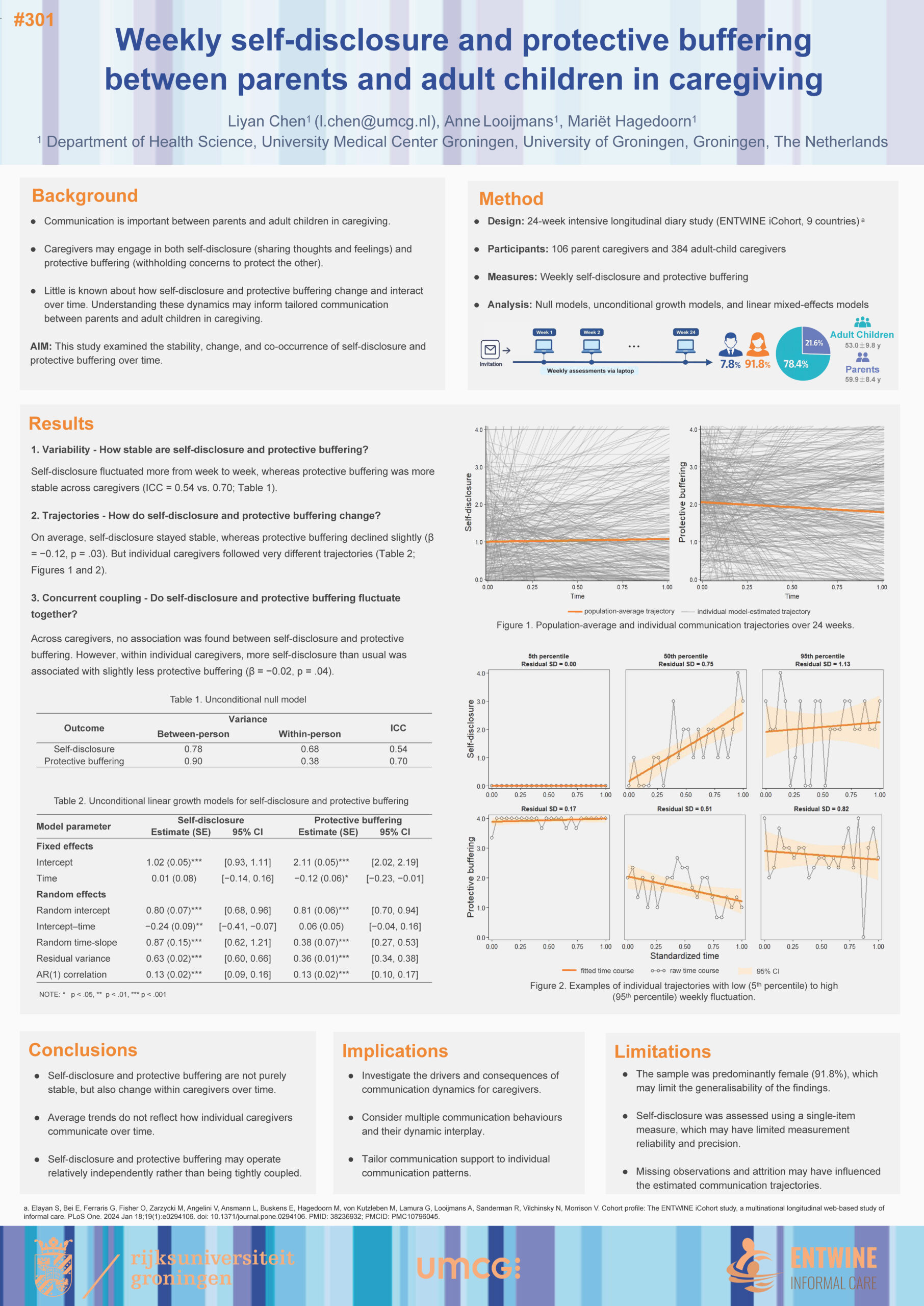
Background: Communication between caregivers and care recipients plays an important role in managing stress in chronic illness contexts. In parent-adult child caregiving relationships, caregivers may engage in self-disclosure (sharing thoughts and feelings) and protective buffering (withholding concerns to protect the other). This study examines whether self-disclosure and protective buffering fluctuate within caregivers in parent-adult child dyads over time and how these behaviors co-occur across weeks, to inform tailored support and intervention strategies for caregivers.
Methods: Data come from the ENTWINE iCohort, a longitudinal study across 8 European countries and Israel. The present analyses focus on caregivers in parent-adult child dyads (106 parent caregivers, 403 adult-child caregivers), who were invited to complete weekly assessments of self-disclosure and protective buffering for 24 weeks. Analyses include intraclass correlation coefficients and multilevel within-person models examining temporal variability and concurrent associations. Baseline predictors will be examined parsimoniously, controlling for age, gender, education, and caregiver role.
Findings: Preliminary descriptive analyses using multilevel models suggested meaningful week-to-week variability in self-disclosure (ICC ≈ .54), whereas protective buffering showed greater between-person stability (ICC ≈ .70), suggesting that these behaviors differ in the extent to which they fluctuate over time. These variance patterns support conceptualizing self-disclosure and protective buffering as dynamic but distinct communication processes and motivate planned within-person coupling analyses.
Discussion: By conceptualizing communication as a dynamic process, this study advances understanding of how caregivers in parent-adult child dyads navigate openness and protection over time, with implications for interpersonal communication, communal coping theories, and caregiver support.
Click on the image to view the poster
The Judges’ Decision
This poster stands out for its robust methods and clear presentation. Using a 24-week longitudinal diary study of 490 caregivers, the authors apply well-chosen mixed-effects models to examine the stability, change, and coupling of self-disclosure and protective buffering, and report the results transparently. The poster is visually well organised and easy to follow. The implications are nicely considered, showing that average trends mask individual heterogeneity and pointing to tailored communication support for caregivers. The frank discussion of limitations further reflects the maturity of the work.
How should we measure loneliness in older adults? A comparison of single- and multi-item measures
Abstract:
K. McKee1, N. Agahi2, 3, M. Naseer4, C. Lennartsson2, 5, L. Dahlberg1, 2
2Aging Research Center, Karolinska Institutet and Stockholm University, Sweden
3National Board of Health and Welfare, Sweden
4Department of Sociology and Work Science, Gothenberg University, Sweden
5Swedish Institute for Social Research, Stockholm University, Sweden
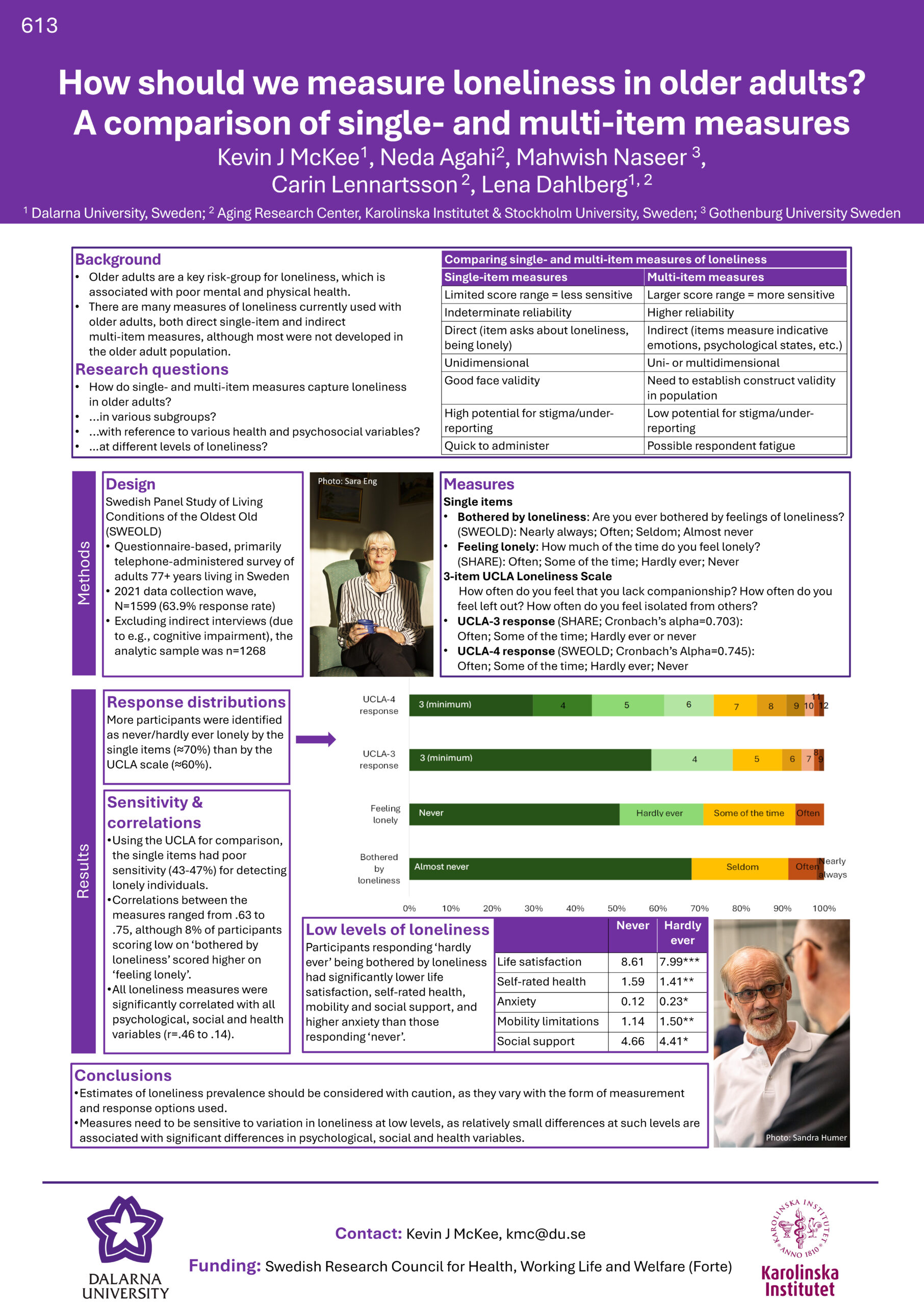
Background: Loneliness is associated with poor well-being and health. There are direct single-item and indirect multi-item measures of loneliness, none of which has been developed among older adults despite their vulnerability to loneliness. This study examined how such measures describe loneliness in older adults.
Methods: Participants in a Swedish representative national survey (SWEOLD, ages 77+, N=1599) completed a questionnaire containing two single-item measures of the frequency of a) ‘feeling lonely’ and b) being ‘bothered by loneliness’, the 3-item UCLA Loneliness Scale, and several psychological, social and health variables (inter alia, depression, social support, self-rated health).
Findings: More participants were identified as never/hardly ever lonely by the single items (70%) than by the UCLA scale (60%). Using the UCLA for comparison, the single items had poor sensitivity (43-47%) for detecting lonely individuals. Correlations between the measures ranged from .63 to .75, although 8% of participants scoring low on ‘bothered by loneliness’ scored higher on ‘feeling lonely’. All loneliness measures were significantly correlated with all psychological, social and health variables (r=.46 to .14). Participants responding ‘hardly ever’ being bothered by loneliness had significantly lower life satisfaction, self-rated health, mobility and social support, and higher anxiety than those responding ‘never’.
Discussion: Estimates of loneliness prevalence should be considered with caution, as they vary with the form of measurement and response options used. Measures need to be sensitive to variation in loneliness at low levels, as relatively small differences at such levels are associated with significant differences in psychological, social and health variables.
Click on the image to view the poster
The Judges’ Decision
Poster 613 stood out for its excellent balance between visual presentation and scientific content. It had a clear presentation of the background, aims, methods and results. The scientific content was well structured, coherent and original.
Climate change in rural areas: psychosocial and health impact
Abstract:
E. van Gestel1, 2, K. Mogendorff1, G. Nagelhout1, 2
2Maastricht University, Netherlands
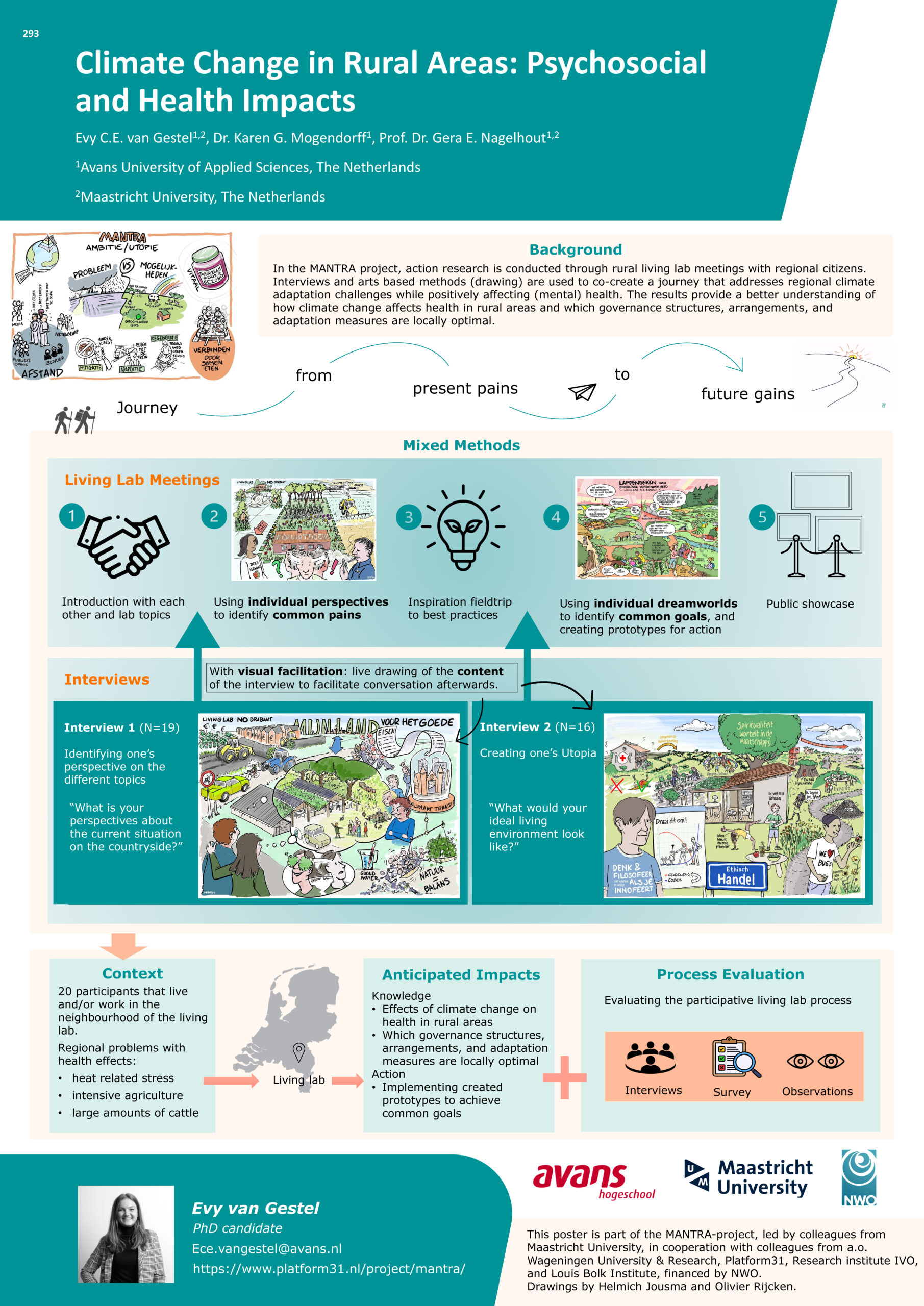
Climate adaptation research has largely concentrated on urban areas. This focus leaves limited insight into how adaptation measures address health in rural contexts. Therefore, climate adaptation strategies are currently insufficiently integrated with rural challenges and health. In the MANTRA project, action research is conducted through rural living lab meetings and interviews with regional organizations, citizens, and companies. We aim to co-create a journey that addresses regional climate adaptation challenges while positively affecting (mental) health. To achieve this, we use creative and visual co-creation methods. Twenty regional stakeholders and researchers participate in the living lab to discuss the question: How can we address climate change in a healthy way? We start by creating a space in which participants can come together as a group. During rural living lab meetings and interviews, participants, together with a sketch artist, visualize and discuss their current rural living environment and their ideal vision — a sustainable countryside. Subsequently, we identify joint actions required to move towards this shared vision (the joint journey). The underlying theoretical framework is the Positive Health model.
Semi-structured interviews and illustrations are analyzed thematically using both inductive and deductive coding. The results provide a better understanding of how climate change affects health in rural areas and which governance structures, arrangements, and adaptation measures are locally optimal. This contributes to advancing approaches that address the health consequences of climate change.
Click on the image to view the poster
The Judges’ Decision
Poster 293 stood out for its clear and engaging presentation of scientifically relevant and original work. The poster was easy to follow, while the background, aims, methods and results were presented clearly and coherently.
Reducing sedentary behavior in older adults: a full factorial randomized trial
Abstract:
N. Lorbeer1, R. Schwarzer1, N. Knoll1
Background: Despite recommendations to reduce sedentary behavior, older adults spend substantial amounts of time sitting. Although action planning is an established self-regulatory behavior change technique, evidence for its effectiveness in older adults is mixed. This preregistered trial examines whether augmenting action planning with mental imagery enhances its effectiveness in reducing sedentary time in older adults.
Methods: A total of N = 160 participants aged 70 years and older with a sedentary lifestyle are currently being recruited from the general population in Germany. The study employs a 21-day full factorial randomized design, with participants allocated to one of four conditions in a 2 (action planning: present vs. absent) × 2 (mental imagery: present vs. absent) design. During a face-to-face intervention session on day 8, participants’ sitting habits are addressed and they engage in the assigned behavior change techniques. Sedentary time as the primary outcome is objectively assessed using accelerometers.
Plan of analysis: Manifest path models will be estimated with sedentary time in week 3 as the primary outcome. Effect-coded action planning, mental imagery, and their interaction will be included as predictors. Covariates will include baseline sedentary behavior and accelerometer wear time. Analyses will follow an intent-to-treat approach using full information maximum likelihood estimation.
Discussion: By disentangling the individual and combined effects of action planning and mental imagery, this study aims to advance understanding of self-regulatory mechanisms underlying sedentary behavior change in older adults. The findings are expected to inform the development of more targeted behavior change interventions in an ageing population.
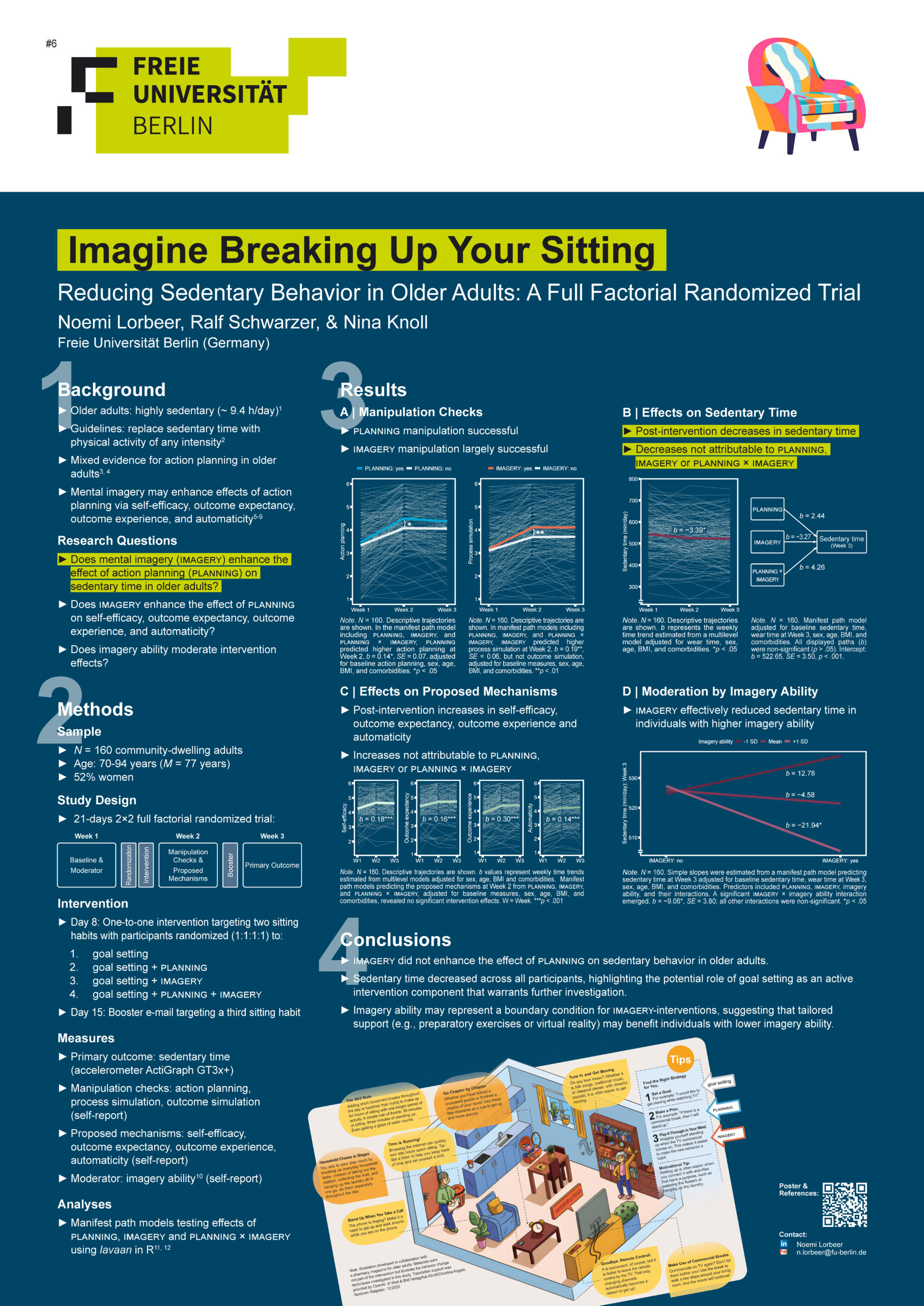
Click on the image to view the poster
The Judges’ Decision
This poster excels through its rigorous 2×2 factorial randomized design with objectively measured sedentary time in 160 older adults. It transparently reports null main effects while revealing that imagery reduced sitting among those with higher imagery ability, pointing toward tailored interventions. Clear visuals and practical tips make it both scientifically strong and highly relevant for healthy aging.
Personalized digital healthcare advice to bridge the digital divide: A pragmatic evaluation in GP practice
Abstract:
E. Metting1, T. Mesken2, M. Spiller2
2UMCG, Netherlands
Healthcare is increasingly digitalizing, aiming to improve efficiency and patient outcomes. However, about 25% of Europeans face difficulties using digital technology, with challenges rooted in a lack of awareness about digital healthcare and its potential benefits. Behavioral science indicates that many are in a “precontemplation phase,” unready to change simply because they do not know what is possible. Promoting digital inclusion starts by raising awareness and understanding.
To address this, we developed a free, multilingual website (https://questionnaire-digitalezorg.web.rug.nl/) that provides personalized digital healthcare advice. The development was informed by 16 patient focus groups across the UK, Netherlands, Belgium, and Germany, 8 healthcare professional interviews, and 500 patient questionnaires from seven countries. The website asks users seven short questions about their needs and concerns, delivering tailored advice and explanatory videos. Usability and content were refined based on feedback from Dutch COPD patients, digital accessibility experts, and healthcare professionals, including simplifying and stratifying the questionnaire.
A pragmatic evaluation will take place in a Dutch primary care setting in January 2026 with 100 patients who do not currently use digital health portals. Digital healthcare uptake will be measured at baseline and after six weeks; usability will be assessed via the System Usability Scale and satisfaction with the Net Promoter Score. I will present the findings at the conference.
This accessible online resource aims to empower digitally excluded patients and accelerate inclusive digital transformation in healthcare, illustrating that a helpdesk alone is not enough for true digital inclusion.

The Judges’ Decision
This poster tackles a pressing equity challenge: making digital healthcare accessible to the roughly 25% of Europeans who struggle with technology. Its free, multilingual advice website is grounded in extensive co-design across seven countries and is now being evaluated in real GP practice. By turning behavioral insight into a practical tool, it offers a scalable path toward truly inclusive digital healthcare.